Diamond Certificates & Appraisals
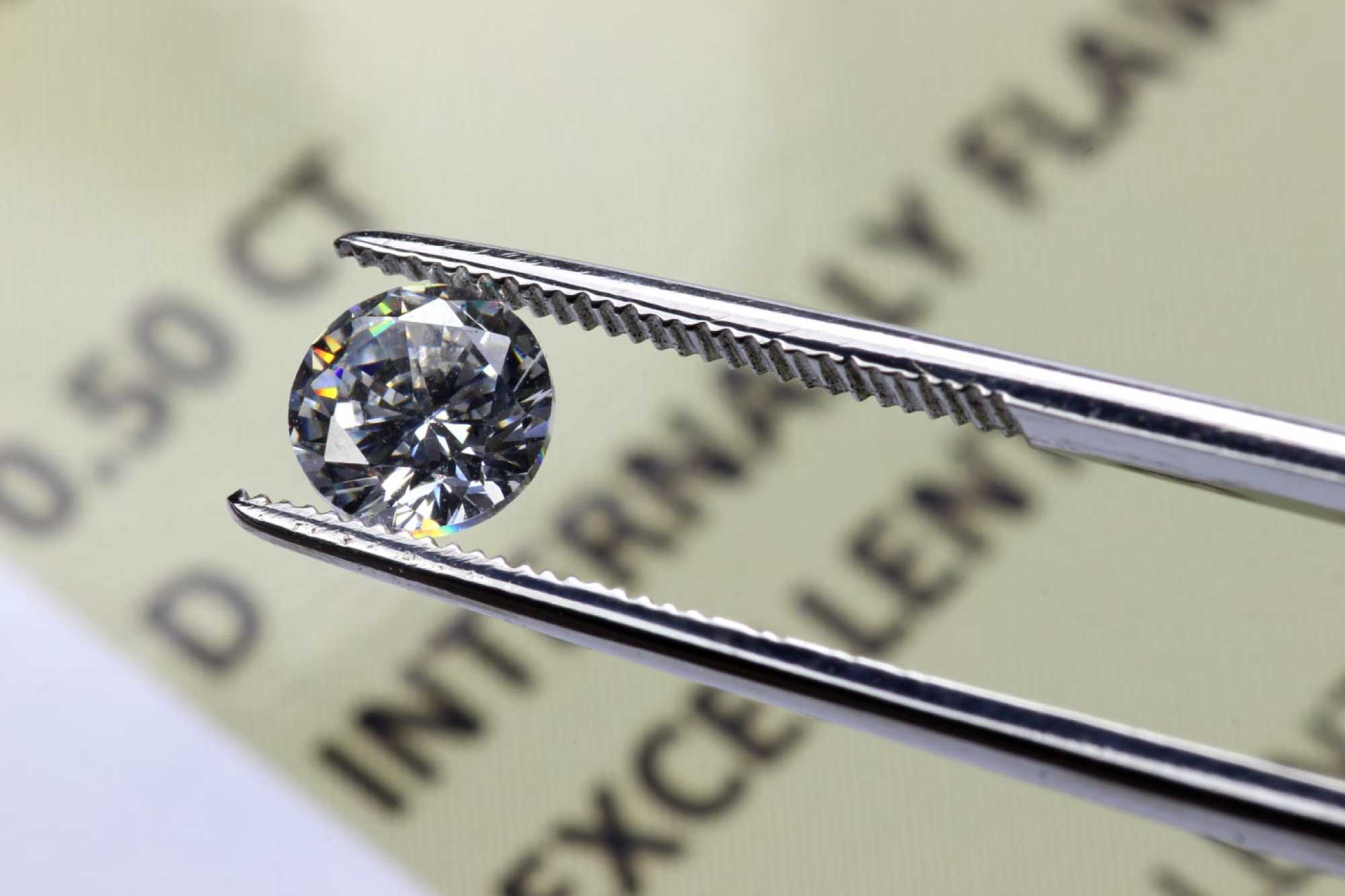
A diamond certificate, otherwise known as a diamond grading report, is an independent opinion of quality in a gemstone. Most high quality diamonds and valuable colored gemstones have certificates as a matter of confidence and convenience for the buyer.
At Christopher Duquet, our Graduate Gemologists (both Christopher and Villi) provide certificates and appraisals that you can trust. As a part of the Kimberly Process, all diamonds are conflict free.If you’d like to learn more before you buy an engagement ring, our guide walks you through the different types of certifications and what to keep in mind when evaluating a diamond’s paperwork.
The Best Diamond Certifications to Verify Authenticity
It’s important to note that not all diamond grading reports are equal. The GIA Diamond Grading Report is considered the best and most reliable independent grading report for diamonds. There are other laboratories, including the EGL (European Gem Lab) and the HRD (Hoge Raad voor Diamant) in Antwerp.
Beware of copycat, look-alike reports. There are a number of questionable knock-offs that choose names similar to legitimate labs.
GIA (Gemological Institute of America)
The Gemological Institute of America is the jewelry industry’s best and most respected source of education and certifications. There are 2 branches of GIA: the laboratory services and education divisions. GIA’s laboratory services division issues independent grading reports on diamonds and colored gemstones. The GIA education division is the most prestigious and universally recognized institute of learning in jewelry and gemology fields. An advanced degree from the GIA is called a G.G. (Graduate Gemologist degree). At Christopher Duquet, both Christopher and Villi are Graduate Gemologists.


We use GIA for our customers. View sample reports:
VIEW / DOWNLOAD How to Read a Diamond Grading Report
VIEW / DOWNLOAD How to Read a Diamond Dossier
Other Diamond Certificates
EGL, Gemologist Laboratory
EGL is a name used by numerous independently affiliated gemological laboratories around the world, both in the USA and overseas. The US based lab is generally considered the most reliably accurate lab, but can vary in opinion from the GIA in some cases. Other labs, especially EGL international and EGL Israel, can vary significantly from GIA standards and have garnered controversy recently. The negative perception of these labs has led many stores and institutions in the US to avoid using these labs.
HRD (Hoge Raad voor Diamant)
This is the gemological laboratory under the umbrella of the Antwerp Diamond Council, which represents the Belgian diamond industry. These reports are slightly different from GIA or any others in their format and terminology, but are reliably accurate and ethical. They are not widely seen in the US, likely due to the dominance of GIA and the limited influence of Antwerp in the US market.
AGS (American Gem Society)
This is an American-based independent gemological laboratory associated with the trade organization American Gem Society. The AGS offers trading reports using a different methodology than the GIA, which states quality designations in letters. The AGS uses a number system, and is therefore not as widely used as the GIA system of grading. The AGS is none the less very scientific and ethical and accurate in their reports. Reports are less popular than GIA, primarily due to the universally recognized character of the GIA system.
IGI (International Gemological Institute)
This laboratory is much more popular outside the United States, and is not widely used in the American market. Their reports are generally considered less reliable and substandard to GIA or AGS reports. This lab uses “valuations,” which are highly unusual, greatly inflated, and generally disregarded by the trade.
PGS (Professional Gem Sciences)
This is a highly regarded independent laboratory in Chicago. It is both ethical and precise, using GIA methodology and standards. They serve both the trade and consumers and provide a high level of service on a walk-in basis.
FAQs About Diamond Certifications
What is the best diamond certification?
The GIA (Gemological Institute of America) grading report is the gold standard. It’s the most consistent, conservative, and universally trusted report in the industry. If you’re making a significant purchase, insisting on a GIA report is the single easiest way to protect yourself. That said, AGS and HRD reports are also reliable — the key is to avoid labs whose grading has a reputation for being lenient or inflated, which can make a stone appear better on paper than it actually is.
What is the Kimberley Process?
The Kimberley Process Certification Scheme (KPCS) is an international initiative established in 2003 to prevent the trade of conflict diamonds. Participating countries must certify that their diamond exports are conflict-free before they can cross international borders. At Christopher Duquet, every diamond we work with has to meet an extensive list of requirements to ensure it comes from a “conflict-free” source.
Do lab-grown diamonds have certificates?
Yes, and they should. Lab-grown diamonds are graded using the same 4Cs as natural diamonds, and reputable labs including GIA and IGI issue grading reports for them. IGI has become the dominant lab for lab-grown certificates, largely because GIA only recently began issuing full grading reports (rather than identification reports) for them. If you’re buying a lab-grown diamond, make sure it comes with a certificate from a recognized lab just as you would for a natural stone.
How do I check a diamond certificate?
Every legitimate grading report includes a unique report number. You can verify GIA certificates directly on GIA’s website using their report check feature. The number is also typically laser-inscribed on the diamond’s girdle (a tiny engraving visible under magnification) so you can match the stone in front of you to its documentation. If a seller is reluctant to let you verify a certificate or the report number doesn’t return results in the lab’s database, treat that as a serious red flag.
What is the diamond certification process?
A diamond is submitted to a gemological lab either by a cutter, dealer, or jeweler. There, a team of trained gemologists grades the stone independently, and the results are reconciled into a final report. The stone never leaves a secure chain of custody, and the grader has no financial stake in the outcome. This independence is exactly what makes a certificate meaningful: it’s an unbiased third-party opinion rather than a seller’s claim.
Is a diamond certificate the same as an appraisal?
No: a grading report describes what a diamond is in terms of its measurements, weight, cut quality, color, and clarity. An appraisal assigns a dollar value to it, typically for insurance purposes. Appraisals are issued by jewelers and appraisers, not gemological labs, and the value they assign often reflects retail replacement cost rather than resale value. You need both for different reasons: a certificate to understand the stone’s quality, and an appraisal to insure it properly.
Can I sell my diamond without a certificate?
While you can sell your diamond without a certificate, you should expect less money. Without a certificate, a buyer has to rely on their own assessment of the stone’s quality, and they’ll typically price in uncertainty by offering less. If you’ve lost a certificate, you can submit the diamond to GIA or another lab to obtain a new one. The cost is usually modest relative to the difference it can make in a sale.
Do small diamonds need certificates?
Smaller diamonds, typically under 0.30 carats, are often sold without individual certificates because the cost of grading can outweigh the value of the stone. Melee diamonds (the small accent stones in pavé or halo settings) are almost never individually certified for this reason.
Find a Diamond
Our diamond experts can guide you to find the diamond or gemstone that will be the best fit based on style, cut, color, and value. You can begin by scheduling a consultation to speak with one of our expert gemologists directly.