Hand-Forged vs. Cast Jewelry: Differences in Custom Jewelry
When researching custom jewelry options, you may have come across a couple of different methods jewelers and goldsmiths use for crafting these items. These methods can be grouped into two buckets; hand-forged jewelry (also known as hand-fabricated jewelry) and cast jewelry. Below we give an outline of both so you can best understand all options when choosing your custom jewelry.
What is Hand-Fabricated Jewelry?
You can think of hand-fabricated or hand-forged jewelry as the original method employed by all jewelers. Before the advent of modern technology, jewelry-making was a cost and labor-intensive process. In hand-forged jewelry, the metal is extensively hammered and worked from ingots into wires. This makes it exceptionally dense and durable, as all that hammering greatly compresses the metal.
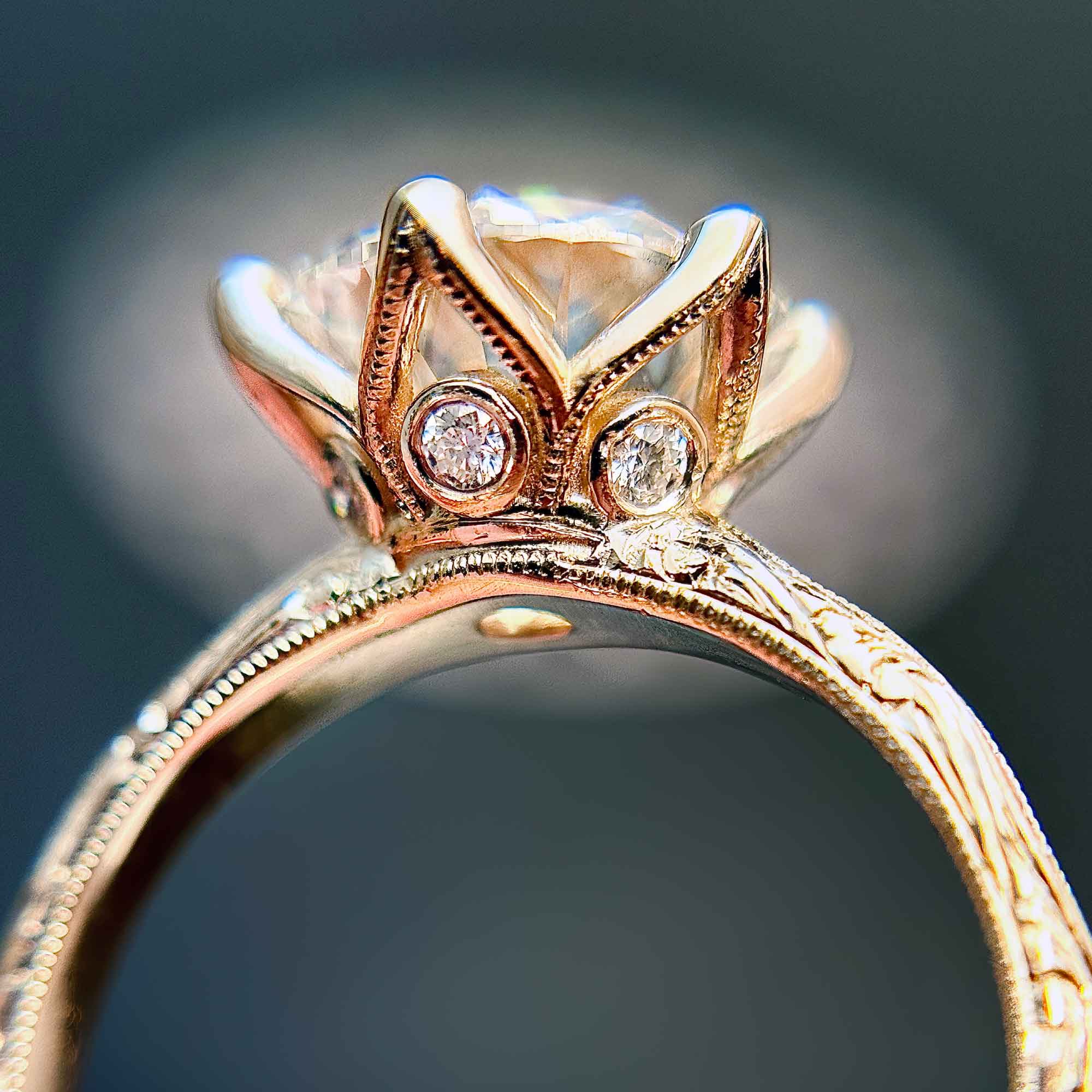
Hand-fabricated jewelry is known for being highly resistant to wear and tear – most heirloom jewelry is hand-fabricated. However, because of the way the metal is hammered by hand, hand-forged jewelry is limited in its design. It is more suited to simple, elegant features as opposed to intricate or unique designs.
What is Cast Jewelry?
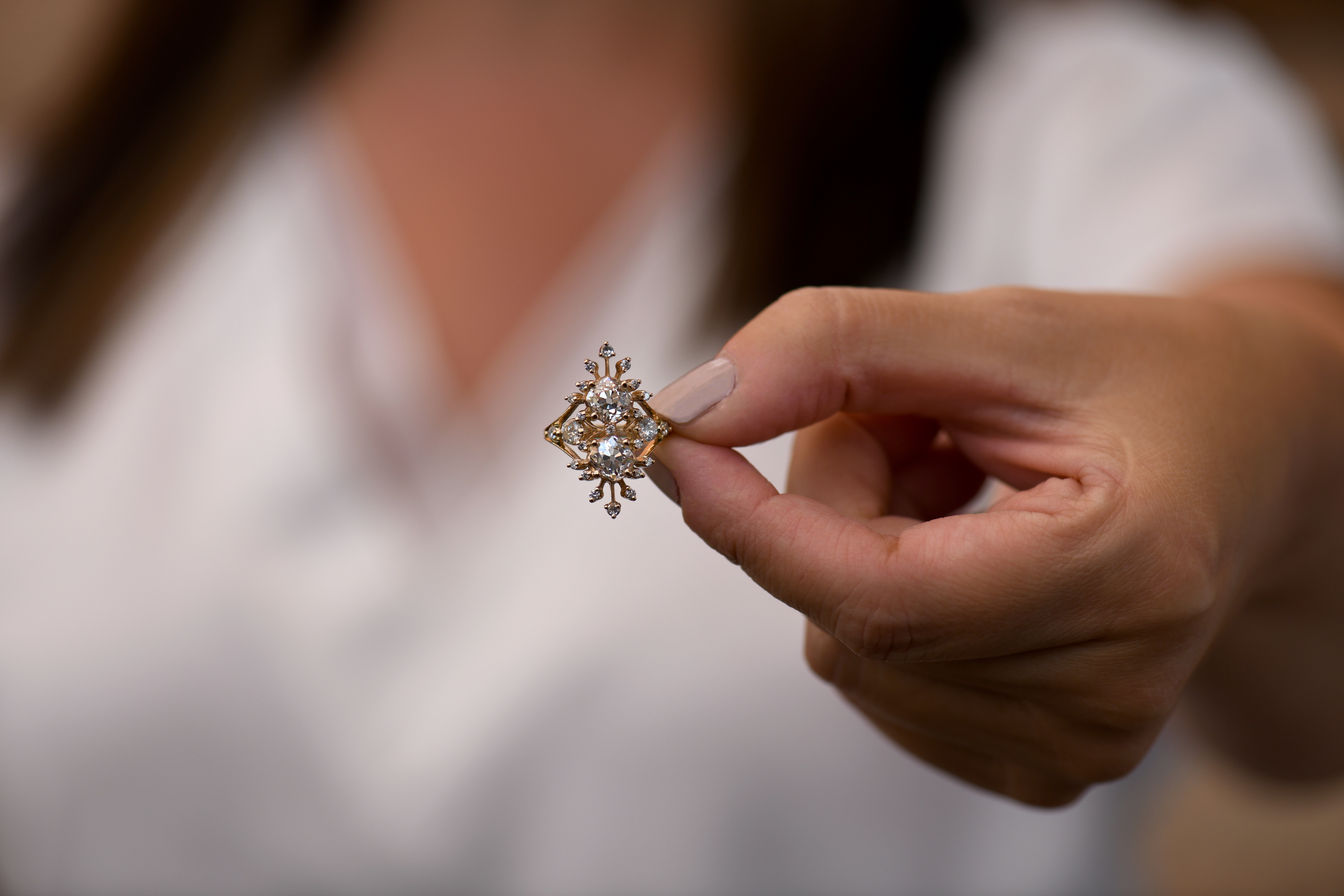
As opposed to being entirely hammered and crafted by hand, cast jewelry is made from a mold. The jewelry designer heats the metal until it is molten, and then pours it into the mold until it has cooled. Because the jewelry isn’t hammered, the metal is lower density which makes it more prone to wear and tear than hand-fabricated jewelry. However, the method of construction makes cast jewelry much better suited for delicate design work.
Hand-Forged vs. Cast Jewelry Quality Comparison
Below is a helpful table outlining the main costs and benefits to each jewelry making method.
| Cast Jewelry | Hand-Forged Jewelry | |
| What is it? | Metal is heated and poured into a wax mold | Metal is hammered from ingots into wires |
| Durability | Less durable | Extremely durable |
| Cost | Affordable | Expensive |
| Time | Relatively quick | Extensive |
| Design Capabilities | Flexible and nearly limitless | Limited, best for simple designs |
Our Custom, 3D Printed and Cast Jewelry
At Christopher Duquet, we use a multi-step process when designing your custom piece. We begin with hand-drawn mockups based on your specifications. Once the design is established, we create photorealistic renderings using CAD (computer-aided design) illustrations. Lastly, we 3D print a wax model based on the CAD illustrations, which is then cast in metal.
This lost wax casting process allows us the level of precision and seamlessness we require in all of our projects. As expert jewelers and goldsmiths, we believe that the craft must adapt to the time. Our goal is to anchor our practice in traditional jewelry design techniques while enhancing our designs with modern technology, thereby pushing the limits of what we can make.
Contact us today to get started on your custom jewelry journey.
FAQs About Hand Forging and 3D Printing Jewelry
How do I know if a jeweler hand-fabricates or casts their own jewelry?
The best way to find out is simply to ask. Reputable jewelers are usually happy to explain their process, and many will even show you photos or videos of their workshop in action. You can also look for clues in how a piece is described: terms like “hand-forged,” “hand-fabricated,” or “one-of-a-kind” typically point to hand-forging, while “cast” or “made-to-order” often indicates casting. Physical details can be telling too—hand-forged pieces tend to have slight, organic variations, while cast pieces are usually more uniform and precise.
What is the value in a handcrafted piece vs. something mass-produced?
Handcrafted jewelry carries value that goes beyond the metal and stones themselves. Each piece reflects the time, skill, and attention of the artisan who made it, often resulting in subtle imperfections that give it character and a one-of-a-kind quality. Mass-produced jewelry, on the other hand, is made to be identical and efficient, prioritizing consistency and affordability over individuality. When you choose a handcrafted piece, you’re investing in craftsmanship, supporting small-scale artistry, and often getting a design you won’t see replicated on someone else.
What are some modern methods for jewelry production?
Modern jewelry production has moved well beyond traditional casting and hand-forging. CAD software and 3D printing let designers create precise digital models before touching any metal, while laser cutting and CNC milling add new levels of accuracy for intricate designs. AI has also entered the process, helping jewelers generate design concepts, explore variations, and visualize pieces in different metals or settings before production begins. These tools work alongside traditional techniques, but the final craftsmanship—whether cast or hand-forged—still comes down to human skill.