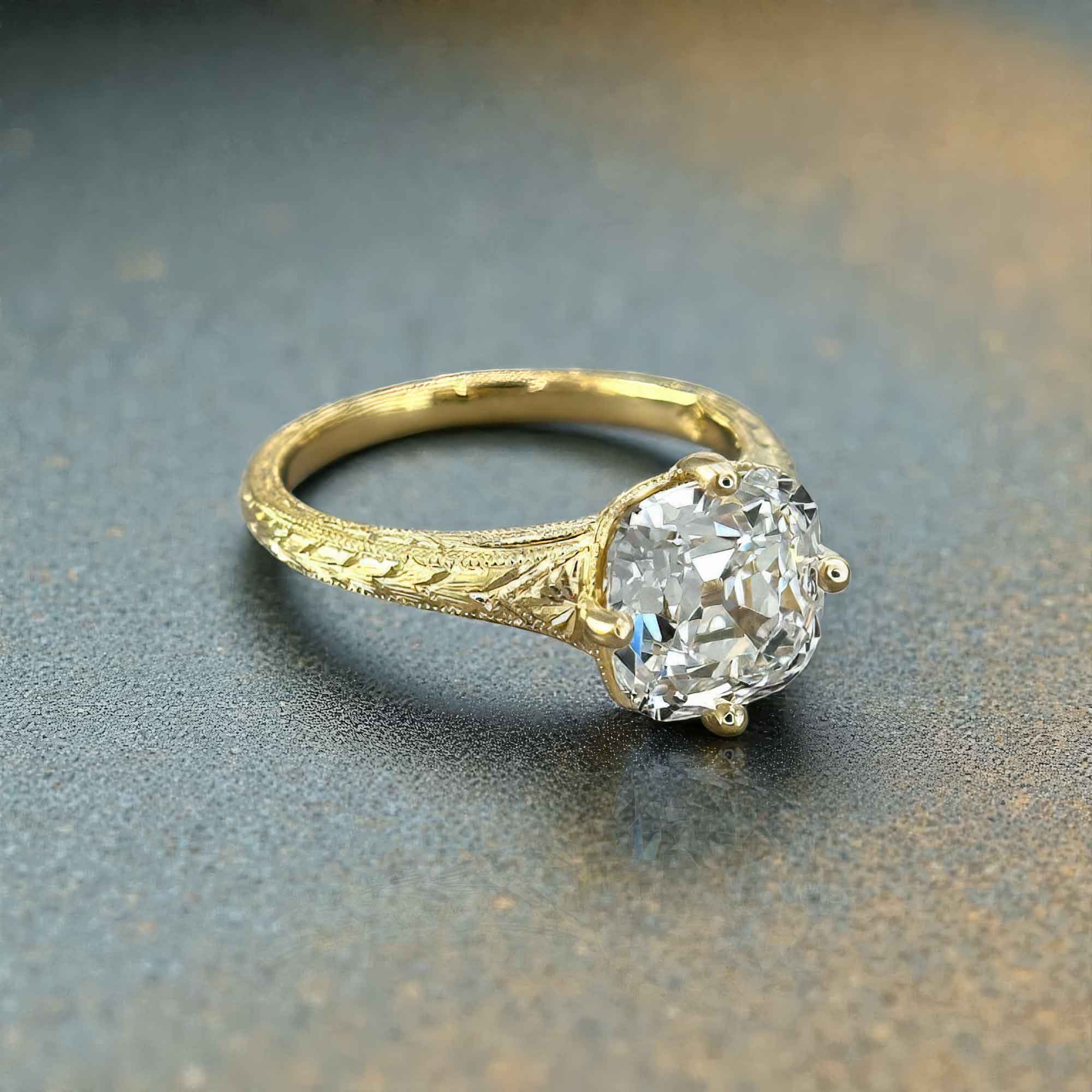
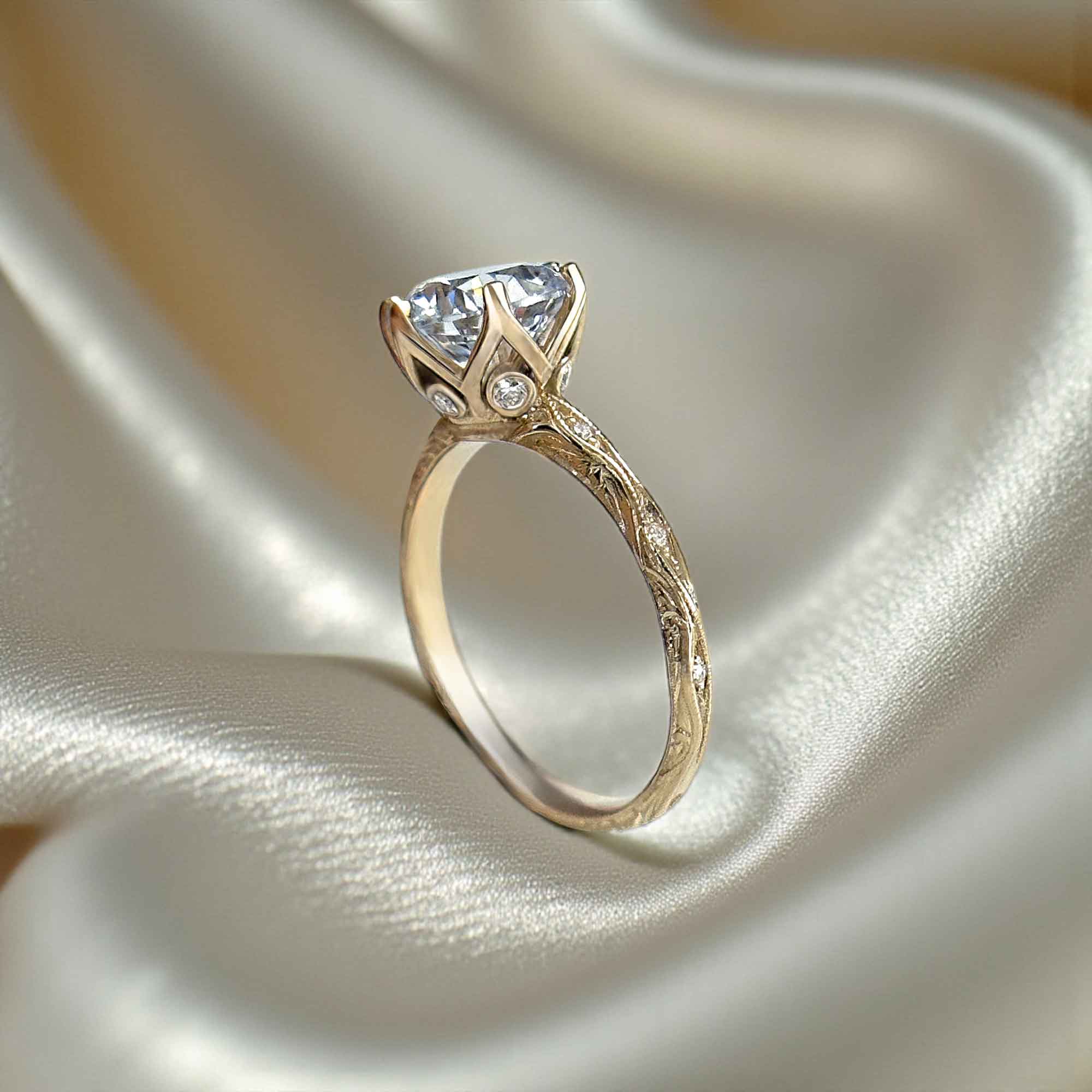
Big Diamonds are Everywhere! Here’s Why They’re Trending
Does it seem like the “kids” are all getting really big diamond engagement rings? It does, in fact, because many are. Big diamonds are trending due to culture, access, and affordability.
The 2-Carat Engagement Ring Is the New Normal
The average size of a new engagement ring purchase in Chicago this year is around 2 carats, with many closer to and above 3 carats. This would have been economically impossible 5 years ago, when the average size of a new engagement ring was 1 carat or less. That is because the majority of new diamond engagement rings in Chicago (and many other areas) are lab-grown diamonds.
Big diamond normalization is underway and shows no sign of diminishing any time soon. The cost of lab-grown diamonds is 60-80% less than that of natural mined diamonds, enabling young couples with the means to upsize their engagement rings and impress their families and peers.
Why Bigger Diamonds? The Social Forces at Play
Powerful social constructs are motivating young couples to choose much larger engagement ring diamonds than previous generations. Affordability and access allow them to acquire these symbols of status and success without the burden of cost or sacrifice that has always been associated with large gemstones.
Since lab-grown and natural diamonds are visually indistinguishable to the naked eye, there is little reason not to indulge in lavish sizes of stones. The traditional concepts of rarity and investment have been overshadowed, to a great extent, by the more powerful idea of representing wealth and success.
A Generation That Sees Diamonds Differently
The generations born post-Internet have their own worldviews and attitudes, including the perception that rarity in natural gemstones is less important than it was for previous generations. Lab-grown diamonds continue to increase their market share as natural diamonds struggle to compete in the bridal market.
Interestingly, the traditional idea of an engagement ring remains important to Generation Z and Millennials, as it does for other generations. The desire for love, recognition, and importance is as relevant as ever, and the engagement ring, especially an impressive one, represents success in these areas of life. The engagement ring continues to be a symbol of the passage into adulthood and the milestones that come with it.
Style notwithstanding, diamond size is the dominant trend in current bridal design and the market. Modern, classical, or vintage-inspired, bigger diamonds are evident across all aesthetics.


Lab-Grown Diamonds: Synthetic Stones, Timeless Symbolism
Man-made and non-traditional in nature, lab-grown diamonds have found their place in the bridal market. These inherently synthetic stones are being used in one of the most cherished traditional symbols of our culture. What might seem like an abandonment of tradition is actually a continuation and intensification of the idea of romantic commitment amid economic challenges and uncertainty. It would seem that love overcomes and transforms all.
FAQs About Diamond Size
How big can lab-grown diamonds get?
Lab-grown diamonds can be produced in virtually any size, and there is no practical upper limit the way there is with natural diamonds. While most engagement ring purchases fall in the 1–4 carat range, lab-grown diamonds of 5, 8, and even 10+ carats are commercially available and increasingly accessible. The growth process — whether HPHT (High Pressure High Temperature) or CVD (Chemical Vapor Deposition) — can be extended to produce larger rough diamonds, though very large stones still command higher prices due to the time and resources required. For most couples, the sweet spot remains in the 2–4 carat range, where value, visual impact, and wearability intersect beautifully.
How big of a diamond engagement ring should I consider?
The right size really comes down to three things: lifestyle, hand proportion, and budget. A good starting point is to think about how the ring will look and feel day-to-day. Someone with an active, hands-on job may prefer a lower-profile stone, while someone who loves a bold statement piece might gravitate toward 3 carats or more. Finger size and shape also matter; a 2-carat stone can look dramatically different on different hands. With lab-grown diamonds making larger sizes far more affordable, many couples are choosing to prioritize size without compromising on cut quality.
How can you tell how big a diamond is?
Diamond size is measured in carats (ct), where one carat equals 0.2 grams. However, carat weight alone doesn’t tell the whole visual story — the cut and shape of a diamond have a huge impact on how large it appears. For example, elongated shapes like oval, pear, and marquise tend to look significantly larger than a round diamond of the same carat weight, because of the larger surface area.
What diamond shape looks the biggest for the price?
When it comes to maximizing visual size for your budget, the diamond cut matters enormously. Elongated shapes consistently deliver the most surface area per carat, meaning they look larger face-up than their weight suggests. The oval cut is widely considered the best value for perceived size, offering a surface area roughly 10% greater than a round diamond of the same carat weight. Pear and marquise cuts follow closely. On the other hand, round brilliant diamonds are the most expensive shape per carat and tend to have a smaller face-up appearance.