Everything You Need to Know About Old Mine Cut Diamonds
Old mine cut and old European cut diamonds are in high demand, and it’s easier than ever to enjoy these romantic styles. That’s because lab-grown diamonds are now being cut in variations of these historic forms, making them both more accessible and more affordable than ever before.
What are “Old Miners”?
A) An elderly person who is extracting material from the earth, usually underground.
B) A vintage diamond cutting style, recently trending, and enjoying a resurgence in popularity.
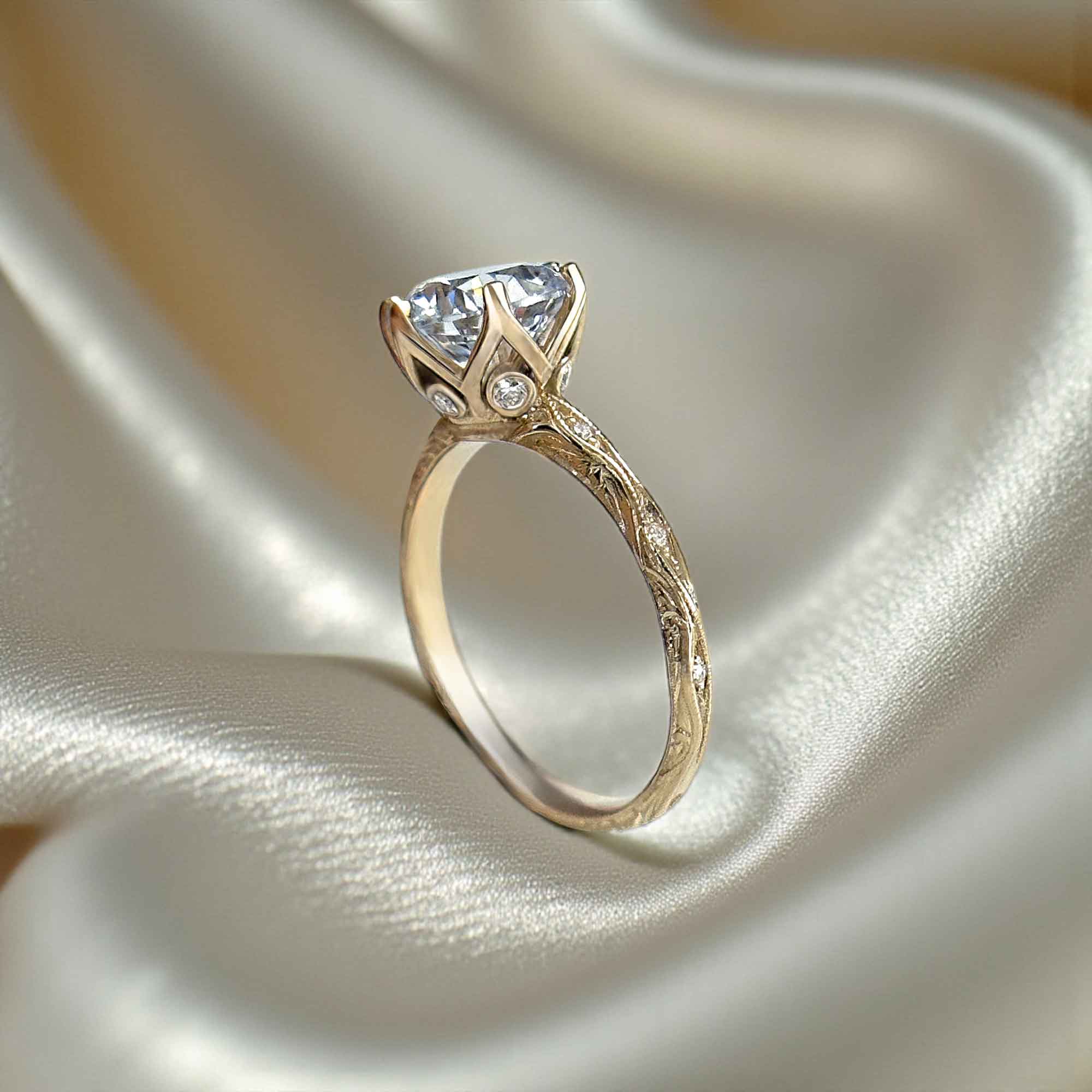
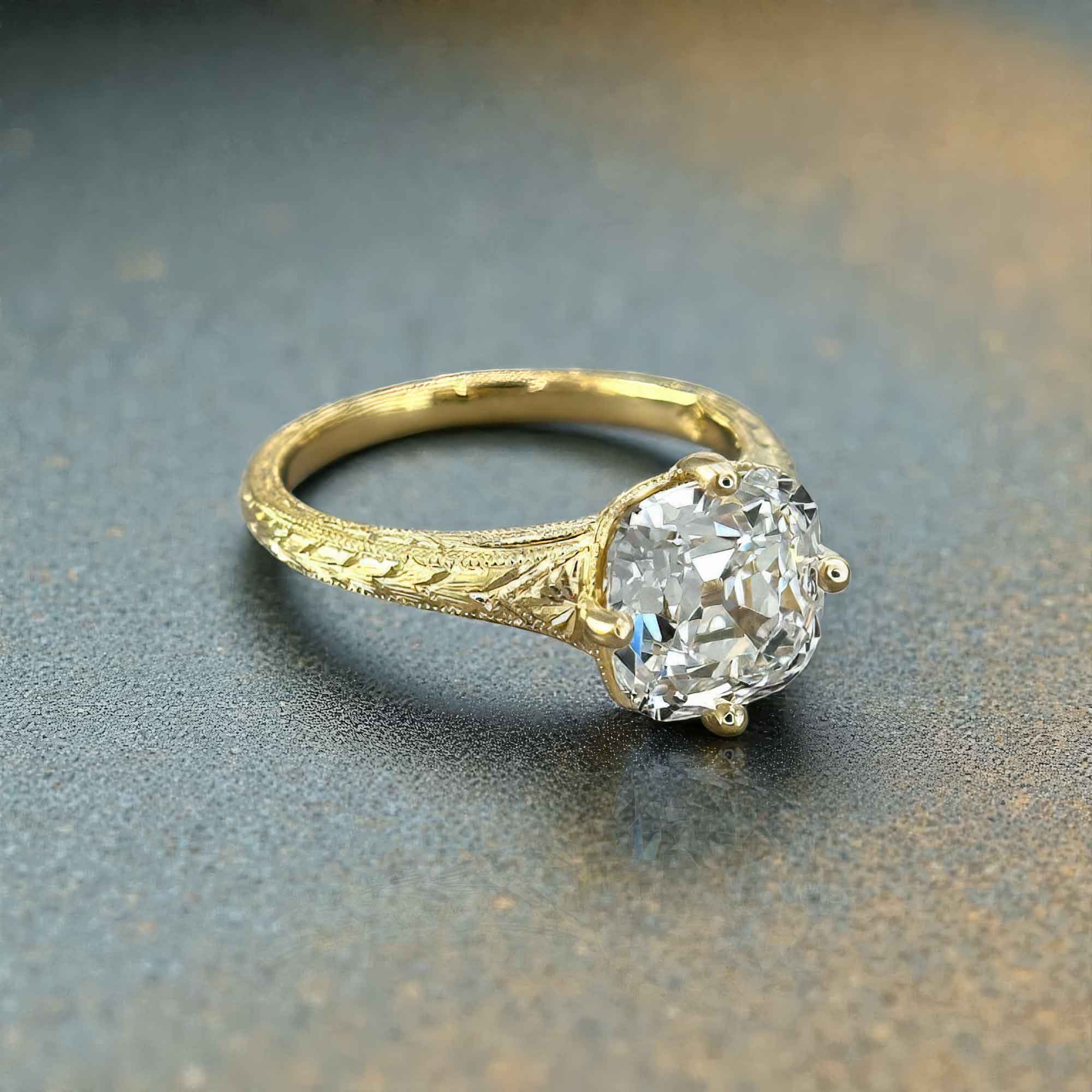
Because they were cut by hand and by candlelight, older miners were optimized for warmth and glow in low light rather than the sharp sparkle modern cuts are designed for. They tend to have a romantic, soft, romantic flash rather than a disco-ball brilliance.
A History of Diamond Cutting
Up to the 1910’s-1920’s, brilliant-cut diamonds, as they are cut today, were not yet made. Diamonds were cut in a range of shapes and proportions depending on the time and location of the diamond cutter.
Old Miners and European cut diamonds were typically cut with an awareness of the rough crystal’s shape, which follows the shape of the finished gemstone. While an old mine cut diamond has a distinctly squarish, cushion-like outline, a European cut has rounder edges.
Diamond cutting was a much more diverse, artisanal, and widely varied trade and industry prior to the 20th-century innovations and standardization that were nearly universally adopted.
In the Victorian and Georgian eras, cutting was decentralized, and regional Bourses controlled the flow of rough diamonds to the cutting trade. The trade developed in different locations around the world, mostly following skilled labor and “safe” economic centers. Eventually, in the early 1900’s, gemstone cutting would become centralized in a few key places, and more consistent uniformity was widely achieved in the gemstone industry.


Lab-Grown Diamonds Bring Old Miners Back to Market
Today, after decades of limited interest, the old cuts are trending once again. Coincidentally, there is a new reality: diamonds can be grown relatively inexpensively and then cut without concern for waste, allowing experimentation and innovation at little cost. The paradigm shift from natural to lab-grown diamond rough opens a “Pandora’s box” of cutting possibilities, including reimagining the styles of times past, both as homage and in response to evolving taste demands and rewards.
Buzz from a recent A-list celebrity engagement (Taylor Swift) created a new engagement ring trend toward vintage-style diamond cuts. The Old Miner, Old European, and various exotic cuts are now being seen in designer collections and influencing the market in unexpected ways. Elongated cushion cuts and off-shape oval diamonds, perhaps as a result, are also seeing strong consumer interest, given how irrelevant they were not long ago.
With widely available rough material and a desire for differentiation, it’s a brave new world of diamond shapes and cuts that will undoubtedly come to market in the near future. Old miners are no longer an underground phenomenon!
FAQs About Old Mine Cut Diamonds
Are old mine cut diamonds more expensive?
Antique old mine cut diamonds can carry a premium due to their rarity and collectible nature, but lab-grown versions are significantly more affordable and widely available. Overall, price varies depending on carat, quality, and whether the stone is antique or lab-grown.
Are old mine cut diamonds GIA certified?
Yes, old mine cut diamonds can be GIA certified. The GIA recognizes and grades antique cuts, though they use different grading criteria than modern brilliant cuts. Lab-grown old mine cuts can also be certified, giving buyers confidence regardless of the stone’s origin.
How do I know if a diamond is a true old mine cut?
Look for the telltale signs: a squarish, cushion-like outline, a high crown, a small table, and a large, visible culet (the flat bottom facet that appears as a circle when viewed face-up). A gemologist or GIA certificate can confirm the cut classification if you’re unsure.
What’s the difference between old mine vs. european cut diamonds?
Both are antique cuts, but old mine cuts have a squarish, cushion-like outline while European cuts are rounder and more symmetrical. European cuts came slightly later and benefited from early mechanization, making them a stepping stone between old miners and modern cuts.
What’s the difference between old mine vs. modern cut diamonds?
Old mine cuts were shaped by hand before gemological standardization, giving them larger facets, a higher crown, and a soft, romantic glow. Modern cuts are precision-cut for maximum sparkle and brilliance under bright light.
What’s the difference between old mine vs. round brilliant cut diamonds?
The round brilliant is the modern, standardized evolution of the old mine cut — perfectly circular with 58 precisely angled facets. Old mine cuts are squarish, hand-cut, and have a warmer, more candlelit quality than the sharp sparkle of a round brilliant.
What’s the difference between old mine vs. cushion cut diamonds?
Cushion cuts are a modern style inspired by old mine cuts, sharing a similar squarish-with-rounded-corners silhouette. However, cushion cuts are precision-cut with modern faceting for more brilliance, while old miners have larger, chunkier facets and an antique character.