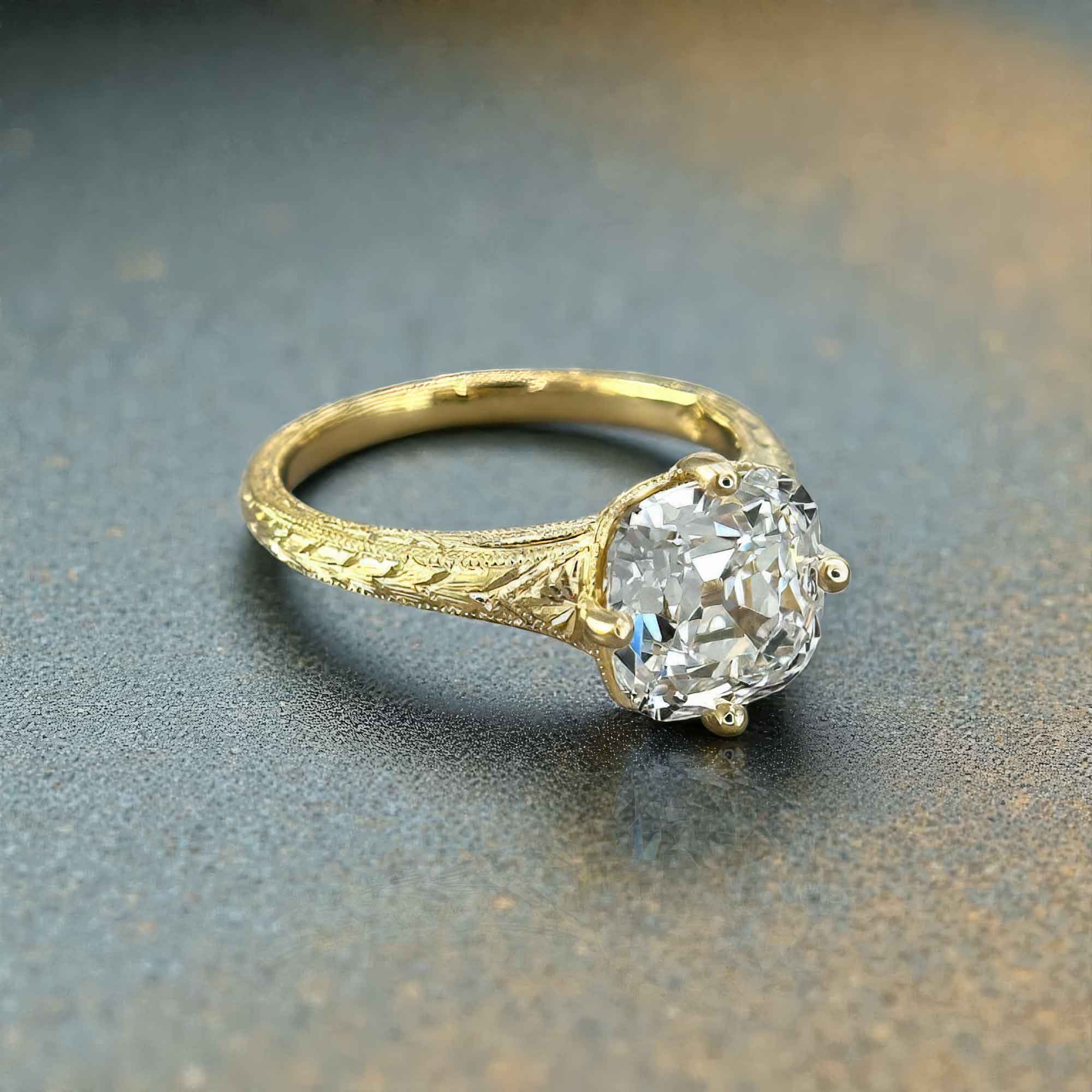
The 4 C’s of Diamonds: A Buyer’s Guide
There are no rules for choosing a diamond, but a few considerations are important and should be factors in your decision making. Like most important buying decisions, research and expert advice goes a long way.
The 4 C’s of Diamonds (Plus the All Important 5th)
There are a few things to consider when choosing a diamond. Some affect how the diamond appears, but size and quality of the gemstone will directly impact the cost. Ultimately the choice is yours, but having an experienced, professional jewelry designer like a graduate gemologist is a valuable resource.
When considering a diamond, we encourage you to consider the 4 C’s of Diamonds: color, clarity, cut, and carat weight. Additionally, we urge you to be mindful of the 5th C: certificate. Here’s our guide to each C and what it means.
Color
Diamonds can be colored yellow, grey, brown, or rarer colors such as pink, green, and blue. For most people, the whiter or more colorless the diamond, the better. Color is graded on a scale based on alphabet letters ranging from D (no color) to Z, with each letter representing an increase in color saturation. For example, K, L, and M-color diamonds are considered “faint color,” while D-F are considered colorless. Not all diamonds fall on this scale, however: vividly colored diamonds are classified as “fancy colored” and are subject to different scale criteria, in which greater color saturation is actually higher value.
The larger the carat weight, the more noticeable the color saturation, so it’s important to also strategize your mounting strategy with diamond color:
- Mounting metal color can make a difference. Yellow gold will make colorless diamonds whiter, for example
- Diamond shape is also an influence on noticeable color. Certain cuts, like asscher, will show more color than a brilliant cut, which disperses more light.
Learn more by reading our guide to selecting a diamond’s color.
Clarity
Because they are formed deep within the earth, or in imperfect lab conditions, each diamond contains small imperfections inside the diamond (inclusions), or on its surface (blemishes). Clarity refers to the visibility of these imperfections, and are scaled from “Flawless” to “Included.” Obviously, the more imperfections, the lower the price of the diamond, though location of these inclusions is also a crucial judgment criteria. Learn more about inclusions and blemishes in our guide to diamond clarity.
Cut
Cut refers not to a diamond’s shape (e.g. round, oval, pear, etc.) but to a diamond’s proportions, symmetry and polish. It basically evaluates how well a diamond’s facets interact with light, affecting the gem’s brilliance and sparkle. While the other 4C’s are largely from the natural growth factors of a diamond, cut is in the realm of man: it’s entirely dependent on the diamond cutter’s talent and precision in working with the gem. A diamond with a good cut will sparkle dynamically, disperse vivid colors, and be brilliant.
Cut is graded from ‘Excellent to Poor’ based on light performance. An ‘Excellent’ diamond will refract and reflect nearly all the light that enters it, while a ‘Poor’ cut has a dull appearance that loses most of the light entering it. Read about approaches to selecting a diamond’s cut here.
Carat Weight
A carat is the unit of weight by which diamonds are measured. One carat is 200 milligrams, or about a paperclip’s weight. Remember, weight isn’t volume: two very differently sized diamonds can both weigh the same, as weight is affected by shape and cut. For example, a well cut diamond that has a lot of surface area might appear bigger than a poorly cut gem that weighs the same.
Typically, large diamonds are found less commonly than smaller diamonds, therefore the price of a diamond rises exponentially to its size. One way you might maximize your return on investment (ROI) is to consider a diamond ever so slightly below a weight threshold, like a 1.9 carat diamond as opposed to a 2 carat diamond, which will be priced differently without a huge visual difference. For more insights, read our article on selecting carat weight.
Certificates, The Fifth C
We believe there is a fifth “C” that buyers should consider when they are purchasing a gemstone. A diamond certificate, sometimes called a diamond grading report, is a complete evaluation of your diamond that has been performed by a qualified professional. Each diamond has its own individual characteristics listed on the certificate, and the certificate is great documentation of your diamond’s authenticity, quality, and identifying characteristics.
Frequently Asked Questions
How do I get the biggest looking diamond for my budget?
Spend time examining precision-cut diamonds, and you’ll notice that their increased surface area results in an overall larger appearance. Try and find a lower-carat, high-quality-cut diamond to maximize your budget and size. If color isn’t an issue, another option is to find a bigger diamond with some color, as colored diamonds are less expensive than a colorless diamond.
Which of the 4 C’s is least important for sparkle?
Clarity, referring to the quantity and magnitude of imperfections in a diamond, has the least effect on sparkle. Tiny imperfections that affect clarity ratings rarely affect the overall sparkle of a diamond.
What is the most important C for an emerald cut diamond?
Emerald cut diamonds have large, window-like facets that showcase the innards of the gem quite vividly. This is a case where clarity of the gem is of the utmost importance, as the cut of this gem leaves little to the imagination when it comes to inclusions in the diamond.
Find a Diamond with Us Today
Our diamond experts can guide you to find the diamond or gemstone that will be the best fit based on style, cut, color, and value. You can begin by scheduling a consultation to speak with one of our expert gemologists directly.