How to Buy an Engagement Ring: The Full Process
Buying an engagement ring is one of the most meaningful and complex purchases you’ll ever make. Between lab-grown versus natural diamonds, carat sizes, custom designs, and fluctuating market prices, knowing where to begin can feel overwhelming. This guide breaks down every major decision point in the ring-buying process, from understanding diamond quality to spotting trends and avoiding common pitfalls, so you can invest with confidence.
Process of buying an engagement ring:
- Buying a ring online vs. in-person
- Choosing between custom and preset rings
- Choosing between lab-grown and natural diamonds
- Understanding the 4 C’s of diamonds
- The price and value of a diamond
- Trending engagement ring shapes and styles
- Choosing a setting and metals
- How to find a ring size
- How to care for a ring over time
Buying a Ring Online vs. In-Person
Buying a ring at a jewelry store can feel offputting if you’re unprepared: you may have to schedule an appointment, feel pressured to make decisions in the moment, and navigate whether or not you feel the deal is fair while interacting with a salesperson.
Many turn to browsing rings online, which feels more convenient and less intimidating. However, buying online comes with its own set of risks. When you browse pictures through online brokers, the pictures are taken in different studios. This inconsistency makes it impossible to compare rings to each other through photos alone. Pictures are also subject to editing. So if you find rings with prices that seem too good to be true, they might be. It’s difficult to know exactly what you’re going to get.
If you do decide to buy online, make sure you know exactly what you’re looking for and that the retailer offers a reliable return policy.
Consider making your purchase in-person for peace of mind. Visiting a jewelry store gives you access to talk to experts directly and see a ring’s sparkle in person. Further, buying locally makes it easy to bring your piece in for cleaning, resizing, or maintenance. Doing your research ahead of time can help you feel more confident and prepared when it’s time to visit a jeweler in-store.
Choosing Between Custom and Preset Rings
Preset rings require minimal decision-making and are ready to take home immediately—a simple, efficient choice for those who find a design they love. Custom rings, on the other hand, offer greater flexibility. At the most basic level, you can select your preferred diamond and pair it with a setting of your choice. A fully custom engagement ring is crafted entirely from scratch, allowing you to choose every detail—from the diamond shape and metal to the setting style and proportions. Working with an experienced jeweler ensures your design is not only beautiful but durable, avoiding common custom design issues like weak settings, fragile bands, or materials that wear prematurely.
Choosing Between Lab-Grown and Natural Diamonds

In today’s bridal market, lab-grown diamonds have become a modern favorite. They’re chemically identical to natural diamonds—made of pure carbon—but grown in a controlled laboratory environment rather than deep within the earth. The result is the same sparkle and structure at a more accessible price, sometimes 60–80% less than natural stones. This has made lab-grown options especially appealing to younger couples who value affordability.
Chicago Jeweler Christopher Duquet further explains the prevalence of lab-grown diamonds, “Created diamonds have become a sort of ‘cheat code’ for the bridal-age adult who wants a significant symbol of love, but who, by nature of age, is financially limited… Now, they can acquire a diamond that’s bigger and cleaner than ever at a fraction of the cost.”
Lab-grown diamonds also appeal to couples who value ethics and sustainability. Because they require less water and energy than traditional mining and are created in safer, controlled environments, they’re often seen as a more eco-friendly choice. Still, some buyers hesitate due to perceptions around authenticity and resale value, preferring the natural origin story instead. Natural diamonds carry a sense of history and rarity that many still find irresistible. Each natural diamond forms over millions of years, creating a one-of-a-kind gem that can feel deeply personal and symbolic. Our lab-grown vs. natural diamond study found that many buyers still choose natural diamonds for their perception of quality, tradition, and rarity.
Understanding the 4 C’s of Diamonds
Before we can get into pricing a diamond, it’s important to understand the 4 C’s–cut, color, clarity, and carat weight.
According to the GIA (Gemological Institute of America), “The 4Cs are the industry standard for evaluating diamond quality. They are also the best way to understand your diamond, and to ensure accuracy in the evaluation of your diamond’s unique characteristics.”
The 4 C’s of a diamond are:
- Cut: A diamond’s cut refers to how well it’s shaped and proportioned to reflect light and create brilliance. Round brilliant cuts are typically the most expensive, while shapes like emerald or cushion cuts tend to cost less.
- Color: This refers to how white or colorless a diamond appears, graded from D (colorless) to Z (light yellow or brown). Colorless diamonds (D–F) are the most expensive, while near-colorless or faintly tinted stones (G–J and beyond) offer better value.
- Clarity: Clarity measures the presence of internal or surface imperfections (called inclusions and blemishes) within a diamond. Flawless and Internally Flawless diamonds are the most expensive, while those with Slightly Included (SI) or Included (I) grades are more affordable.
- Carat Weight: Carat measures a diamond’s weight, which directly impacts its size and price. Larger diamonds are rarer, making higher-carat stones significantly more expensive than smaller ones of the same quality.
The Price and Value of a Diamond
The price you pay should go beyond budgeting. In order to know if a diamond is fairly priced, you should understand what to expect based on carat size and quality. For easy comparison, our diamond pricing guide shows price ranges based on carat size for round brilliant cut diamonds with common specifications.
.5-.99ct
Lab-grown: $500-$1,500
Natural: $1,750-$5,500
1-1.45ct
Lab-grown: $950-$3,000
Natural: $5,500-$13,000
1.5-2ct
Lab-grown: $2,500-$4,500
Natural: $10,500-$25,500
2ct-2.5ct
Lab-grown: $4,500-$5,500
Natural: $20,000-$35,000
2.5ct-3ct
Lab-grown: $5,500-$11,500
Natural: $30,000-$85,000
One additional cost to consider is insurance, especially if you’re unable to replace your ring out-of-pocket. Engagement ring insurance usually costs a small fraction of the ring’s price (1-3% per year) and can help protect your investment from theft, wear and tear, and other damages. It can be easily bundled with your home or car insurance.
Trending Engagement Ring Shapes and Styles
If you’re not sure what shape to choose, our guide to diamond cuts can give you a headstart. The most common cuts you’ll find include round, oval, cushion, emerald, princess, marquise, and pear (or teardrop).

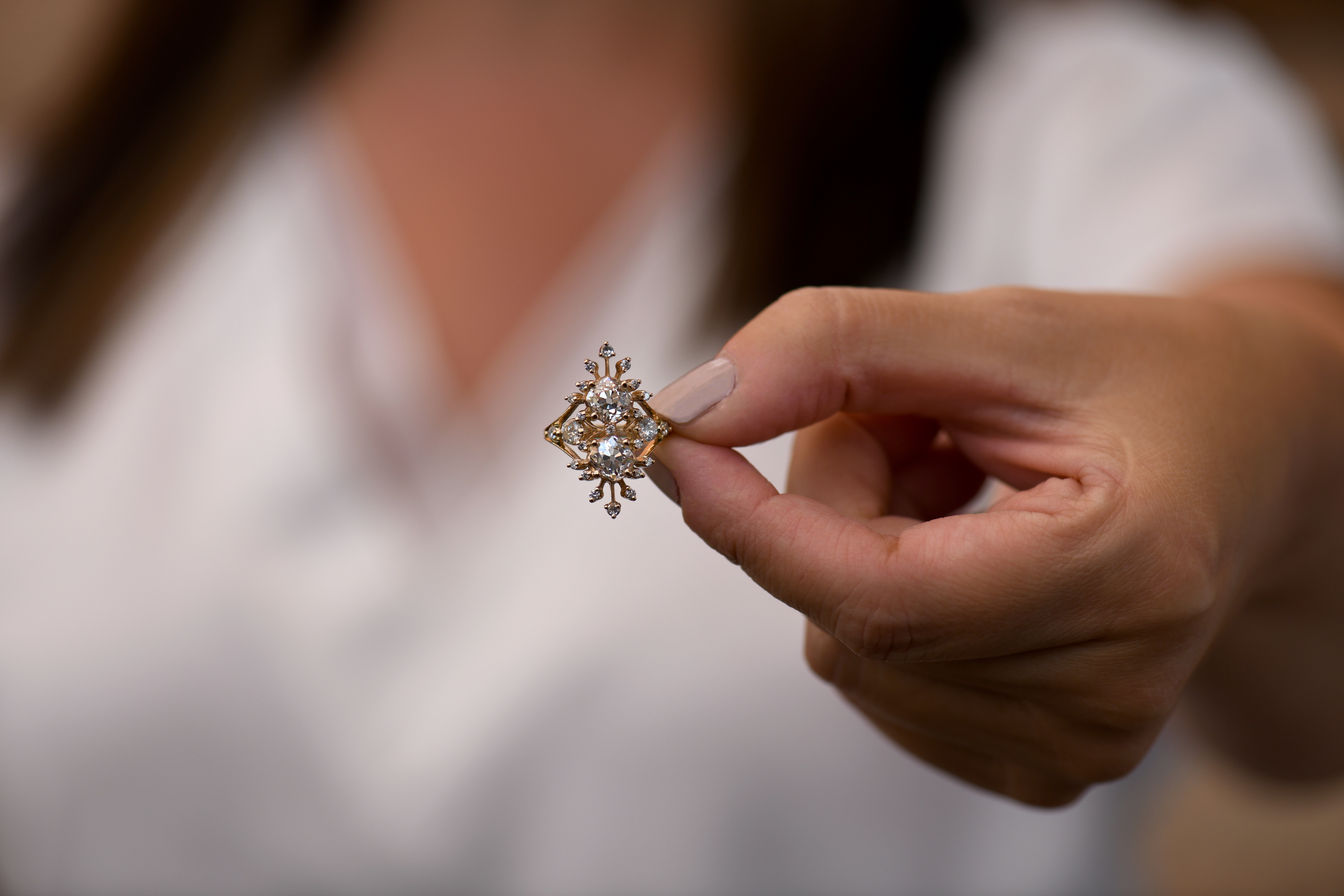
Changes in engagement ring styles are shaped by pop culture, evolving preferences, and new technology. Taylor Swift’s engagement sparked interest in antique-style cuts, particularly cushion and old mine shapes, and reinforced the trend toward larger center stones.
This is also thanks to the rise of lab-grown diamonds, which make intricate cuts accessible. Accent stones and elaborate metalwork are taking a back seat to clean, modern settings that let the main diamond shine.
While fancy cuts are growing in popularity and trendiness, the round brilliant cut continues to remain the most popular among couples.
Christopher Duquet explains, “Intricate accent stones and elaborate metalwork are taking a back seat to clean, modern settings that let the main diamond shine. This shift reflects a broader trend toward minimalism and personalization—couples want a bold, standout centerpiece that reflects their unique style.”
Choosing a Setting and Metals
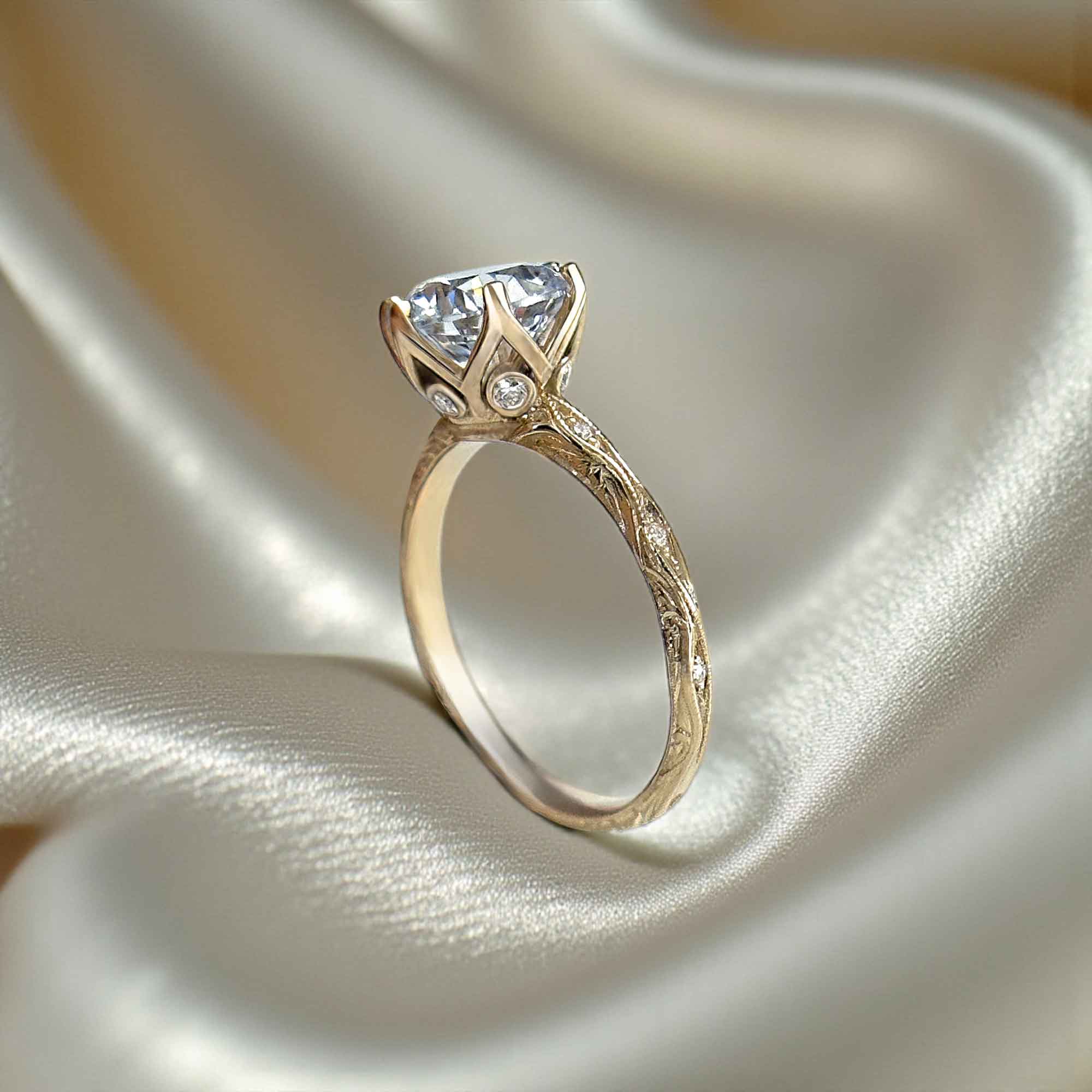
When deciding on a ring setting, consider your partner’s style and lifestyle. If they prefer intricate or vintage-inspired designs, a halo or pavé setting may be ideal. For someone who values simplicity, a classic prong or bezel setting offers a timeless look. It’s also important to think about the ring’s profile—high-profile settings can catch on clothing or gloves, making them less practical for active professions such as healthcare or nursing. The primary setting styles include prong, pavé, halo, and bezel:

When choosing a metal, it’s important to understand the differences in strength and composition. Yellow gold and rose gold are both gold alloys, mixed with metals like copper and silver for durability. They’re slightly softer than other options and may show wear over time.
White gold is also an alloy, typically mixed with nickel or palladium and plated with rhodium to enhance its strength and bright finish; it may need periodic re-plating to maintain its color.
Platinum, by contrast, is a naturally white, dense metal that’s highly durable and resistant to tarnish. While it can scratch, it doesn’t lose metal over time, making it the longest-lasting option for everyday wear.
Christopher Duquet comments on the prevalence of yellow gold among his customers, “We’ve noticed that while platinum and white gold remain beautiful choices, yellow gold is becoming the top pick for many couples. Rose gold, which was once a standout trend, seems to have reached its peak.“
How to Find the Right Ring Size
Determining the right ring size can be one of the trickiest parts of planning a proposal if you’re trying to keep it a surprise. The easiest method is to discreetly borrow a ring your partner already wears on their ring finger (ideally on the left hand) and bring it to your jeweler for measurement.
If that’s not possible, you can order a ring sizer online or visit a local jewelry store for a professional fitting. Keep in mind that finger size can vary slightly depending on temperature, time of day, and even salt intake, so it’s best to measure when hands are warm and relaxed for the most accurate result.
How to Care for a Ring Over Time
To clean diamond jewelry, there’s no need to buy a complicated kit or take your ring to the jeweler. You can clean your engagement ring at home with a mixture of ammonia, dish soap, and hot water. Dip your ring in the mixture and scrub with a soft toothbrush. Then, rinse the ring in clean water and set it to dry. You can also use a hair dryer if you wish to wear your ring immediately after cleaning. For rings that use softer stones like opals, emeralds, or pearls, you can use the same process without ammonia.
Even though you can clean your ring at home, it’s helpful to take your ring to the jeweler annually for checks and tune-ups. They’ll ensure the settings are in place and everything is wearing properly, minimizing the chance you lose a stone.
Work with an expert and get started
Working with an experienced jeweler ensures that every aspect, from diamond selection to setting design, is evaluated with care and expertise. At Christopher Duquet, our gemologists and designers bring decades of experience to each project, guiding clients through every step of the engagement ring buying process. From evaluating diamond quality to ensuring long-term durability, we help you make informed decisions that result in a ring of lasting value. Visit our studio to browse our existing collections or contact us to begin a custom design consultation.