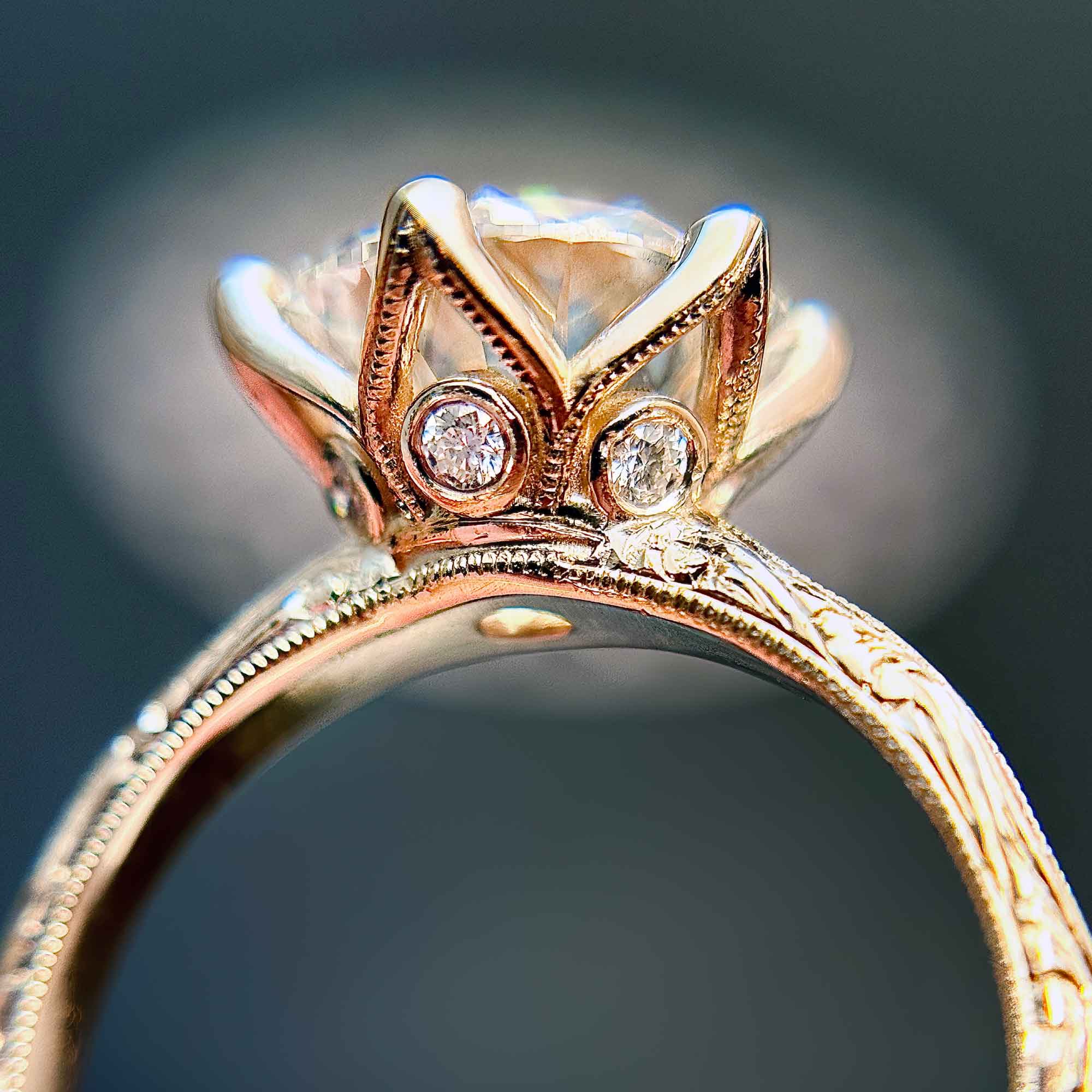
What Can I Do with Inherited Jewelry?
Inheriting jewelry can be both meaningful and complicated. Whether you’ve received a grandmother’s diamond ring, a family wedding band, or an entire jewelry collection, you may find yourself wondering what to do with pieces that hold sentimental value but don’t necessarily match your personal style.
The good news is that inherited jewelry doesn’t have to sit untouched in a jewelry box. There are several ways to give older pieces new life, from restoring their original beauty to transforming them into something entirely new.
If you’re deciding what to do with inherited jewelry, your four main options are:
- Reset: Keep the original gemstones but place them in a new setting that better reflects your style.
- Restore: Repair, clean, polish, or rebuild an existing piece while preserving its original design.
- Redesign: Repurpose gemstones, precious metals, or other elements to create an entirely new piece of custom jewelry.
- Appraise and sell: Have the jewelry evaluated and explore selling it to an estate jewelry buyer, jeweler, or auction house.
Selling Inherited Jewelry
Selling inherited jewelry can be a practical option, but it’s important to understand its value before accepting an offer.
How to Value Inherited Jewelry Before Selling
Even if a piece of inherited jewelry was expensive when originally purchased, age alone doesn’t make it more valuable. Its current market value depends on several factors, including the materials, condition, craftsmanship, and demand for its style.
Before selling, follow these steps:
- Identify the materials. Look for hallmarks indicating gold purity, platinum, or other precious metals. For example, gold might be marked “14K” or “18K,” while sterling silver might be marked “925” or “Sterling.” Gemstones should be evaluated by a qualified professional rather than identified by appearance alone.
- Gather any documentation. Look for original receipts, gemstone grading reports, previous appraisals, and information about the jewelry’s history. This can help establish what you own.
- Have the jewelry professionally evaluated. A qualified appraiser can assess the materials, craftsmanship, and relevant market characteristics. For potentially significant antique or designer pieces, seek someone with experience in that specialty. Remember that an insurance replacement appraisal is not the same as a market estimate.
- Compare offers. If you decide to sell, consider obtaining offers from more than one reputable buyer before making a decision.
For particularly old or unusual jewelry, it’s worth determining whether the piece has value beyond its gemstones and metal content. Antique craftsmanship, designer signatures, provenance, and rarity can sometimes make a complete piece more desirable than its individual components.
What to Look for in an Estate Jewelry Buyer
Pawn shops and businesses advertising immediate cash for gold may be useful for quick transactions, but their offers may focus primarily on resale or precious metal value. They may not be the best choice for evaluating fine craftsmanship, signed jewelry, or historically significant pieces.
Look for a buyer who:
- Has experience evaluating fine, antique, or estate jewelry.
- Clearly explains how an offer is calculated.
- Can identify the quality and characteristics of gemstones and precious metals.
- Provides a written offer without pressuring you to make an immediate decision.
- Has an established reputation and transparent business practices.
Resetting Inherited Jewelry
Resetting involves removing a diamond or other gemstone from its existing mounting and placing it into a different setting. Resetting is appealing when you love the original stone but find the ring itself outdated, impractical, or simply not your style.
One of the most popular ways to modernize inherited jewelry is to reset a diamond ring.
Ideas to Reset a Diamond Ring
There are many ways to update an inherited diamond without losing the connection to its original owner.
- Create a solitaire ring: Give an inherited diamond a timeless appearance with a simple solitaire setting that emphasizes the center stone.
- Add a halo: Surround the original diamond with smaller accent stones in a halo shape to create a more elaborate design.
- Choose a bezel setting: Frame the diamond in precious metal for a sleek, contemporary appearance and additional protection around the stone’s edges.
- Change the metal: Move a diamond from yellow gold into white gold, platinum, or rose gold for a different aesthetic.
- Incorporate additional gemstones: Combine diamonds from multiple inherited pieces into a single ring or introduce colored gemstones for a personalized design.
- Create a three-stone ring: Pair the inherited center diamond with two complementary stones, creating a design that can symbolize the past, present, and future.


Repurposing Inherited Diamonds and Jewelry Settings
Sometimes a simple reset isn’t enough. If you want to transform a family heirloom into something you’ll love or wear more frequently, custom jewelry design may be a fit.
Turn an Inherited Diamond Into a New Piece of Jewelry
Diamonds don’t have to remain in rings. An inherited diamond can become the centerpiece of a pendant, bracelet, or another piece of fine jewelry.
Popular ways to repurpose inherited diamonds include:
- Diamond necklaces: Transform a center stone into a solitaire pendant or incorporate several smaller diamonds into a custom necklace.
- Earrings: Pair inherited diamonds of similar size and quality to create studs or drop earrings.
- Stackable rings: Use smaller gemstones from multiple inherited pieces to create delicate bands that can be worn together.
- Anniversary jewelry: Combine inherited diamonds with new gemstones to commemorate a special milestone.
- Custom bracelets: Incorporate smaller diamonds into a tennis bracelet or a more personalized design.
One question people frequently ask is whether reusing an inherited diamond will save money.
In many cases, using an existing gemstone can reduce the cost of purchasing a comparable new stone. However, you’ll still need to account for the new setting, precious metals, design work, and labor. Complex custom designs may cost more than purchasing a finished piece of jewelry.
A custom jeweler can help determine which original elements are suitable for reuse and provide an estimate before the redesign begins.
Melting Down Inherited Jewelry to Make Something New
Precious metals from inherited jewelry can sometimes be melted down and used to create new pieces. However, reusing old gold or platinum isn’t always as simple as melting a ring and pouring it into a new mold.
Different metal alloys, solder joints, and impurities can affect the quality and workability of recycled metal. Depending on the original piece and the desired design, a jeweler may recommend refining the metal or incorporating new material.
Some jewelers may also offer a credit for the value of the original precious metal rather than directly reusing it.
If preserving the physical materials is important to you, discuss that goal with your jeweler before beginning the project. There is a meaningful difference between creating a new piece using the original metal and receiving credit toward new materials.
What to Do with Inherited Wedding Rings
Inherited wedding rings often carry particularly strong emotional significance. A parent or grandparent’s wedding band may represent decades of marriage and family history, making the decision to alter it feel more personal.
Fortunately, there are several ideas for inherited wedding rings that allow you to honor their history while adapting them to your life.
- Preserve the original design. If the ring has meaningful engravings, distinctive craftsmanship, or a design you appreciate, restoration may be the best choice. A jeweler may be able to repair worn prongs, resize the band, or address structural damage while maintaining its original character.
- Incorporate the ring into your own wedding jewelry. An inherited diamond can become the center stone of a new engagement ring, while smaller stones can be incorporated into a wedding band or anniversary ring.
- Create a meaningful everyday piece. Transform a wedding ring into a pendant, right-hand ring, or other piece of jewelry that can be worn regularly without retaining its original bridal purpose.
Before altering an inherited wedding ring, consider documenting any engravings, hallmarks, or unique design elements. Even when a complete redesign makes sense, photographs and records can help preserve the piece’s family history.
Choosing a Jeweler for Inherited Jewelry Restoration or Redesign
Working with inherited jewelry requires careful attention to delicate settings, worn metal, unusual construction methods, or gemstones that require specialized handling.
When choosing a jeweler for custom work, consider their experience with antique and estate jewelry and inhouse goldsmithing capabilities.
At Christopher Duquet Fine Jewelry, we understand that inherited jewelry is often more than a collection of gemstones and precious metals. Our custom design process focuses on creating pieces that reflect your personal style while respecting the history and significance of the original jewelry.
Whether you’re interested in resetting a diamond, restoring a family heirloom, or creating an entirely new piece, our team can help you explore your options.


______________________________________________________________________
Frequently Asked Questions About Inherited Jewelry
Should I Insure Inherited Jewelry?
If you’ve inherited valuable fine jewelry, consider having it professionally appraised and reviewing your insurance coverage. Standard homeowners or renters insurance policies may have limits on jewelry coverage, particularly for theft or loss.
A separate jewelry insurance policy or scheduled personal property coverage may provide additional protection. Keep photographs, gemstone reports, and appraisal documentation with your records.
Is Inherited Costume Jewelry Worth Anything?
Yes, some inherited costume jewelry can have significant resale or collectible value, even when it doesn’t contain precious metals or natural gemstones.
Vintage pieces from recognizable designers, rare collections, and certain historical periods may appeal to collectors. However, many mass-produced costume jewelry pieces have modest resale value. Before discarding or donating older costume jewelry, check for maker’s marks and consider consulting a vintage jewelry specialist.
What is an Estate Jeweler?
An estate jeweler specializes in buying, selling, evaluating, or working with previously owned jewelry. Estate jewelry can include antique, vintage, and relatively modern pieces, as long as they have had a previous owner. Some estate jewelers also offer restoration, repair, and redesign services, although their capabilities vary.
What’s the Difference Between Restoring and Redesigning Jewelry?
Restoration focuses on preserving a piece’s original appearance and construction while addressing wear, damage, or missing components. This might involve repairing prongs, rebuilding worn metal, or restoring an antique setting.
Redesigning involves making more substantial changes to the jewelry’s appearance or purpose. For example, removing a diamond from an inherited engagement ring and incorporating it into a modern pendant would be considered a redesign.
What’s the Difference Between a Jewelry Appraisal and a Buying Offer?
A jewelry appraisal is a professional assessment of a piece’s value for a specified purpose, such as insurance replacement, estate settlement, or fair market valuation.
A buying offer is the amount a particular buyer is willing to pay for the jewelry. These figures can differ considerably. An insurance appraisal often reflects the estimated cost of replacing an item through an appropriate retail market, while a buying offer accounts for resale conditions, business expenses, and the buyer’s profit margin.
If you plan to sell inherited jewelry, ask for a valuation relevant to resale rather than relying solely on an insurance replacement appraisal.